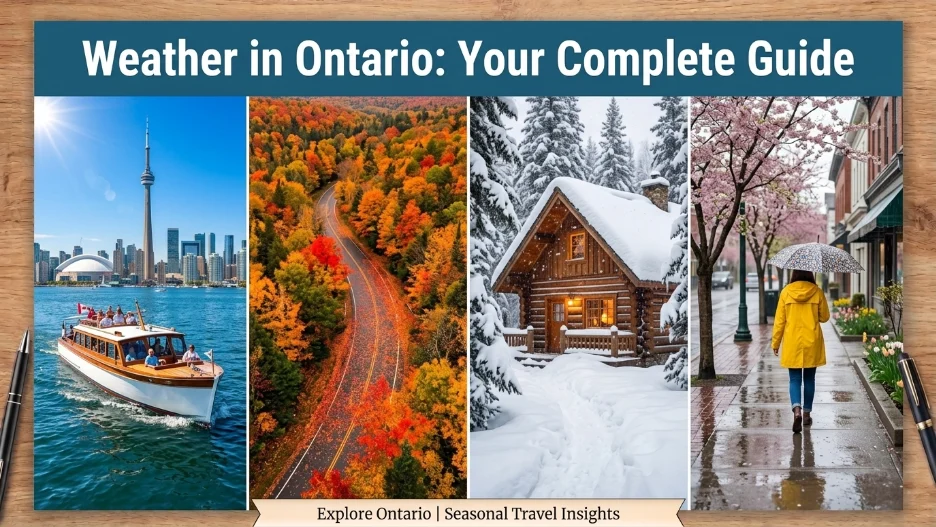
Ontario’s weather varies by season and region. In general, summers are warm to hot (20–35°C / 68–95°F), while winters are cold and snowy, often ranging from -10°C to -30°C (14°F to -22°F). Spring and autumn bring mild temperatures and changing weather conditions
Have you ever wondered what the weather in Ontario really feels like? Maybe you’re planning a trip, considering a move, or just curious about how Canadians handle those famously cold winters. The truth is, the weather in Ontario is anything but simple. It’s a province of extremes, where you can experience everything from humid, sweltering summers to bone chilling, snow filled winters.
In this guide, we’ll break down exactly what to expect from the weather in Ontario throughout the year, explore why it varies so much from region to region, and give you practical tips to handle it all. Whether you’re visiting Toronto, exploring the northern wilderness, or settling in a cozy town, we’ve got you covered.
Quick Answer Table
| Season | Average High (°C) | Average Low (°C) | What to Expect |
| Spring | 8°C 19°C | 8°C 7°C | Rainy, unpredictable, melting snow |
| Summer | 20°C 30°C+ | 12°C 18°C | Hot, humid, sunny with thunderstorms |
| Fall | 2°C 22°C | 2°C 9°C | Crisp, cool, colorful leaves, first snow |
| Winter | 16.5°C 5°C | 16°C 8.8°C | Cold, snowy, icy, and windy |
A Land of Two Climates: The Southern vs. Northern Divide
The most important thing to understand about the weather in Ontario is that it’s not a monolith. The province is massive, and its climate changes dramatically depending on where you are.
Southern Ontario, home to cities like Toronto, Hamilton, and Windsor, has a humid continental climate (classified as Dfa or Dfb) . This means you get four distinct seasons. Summers are warm to hot and can be very humid, while winters are cold and snowy. The moderating effect of the Great Lakes keeps temperatures from getting as extreme as other areas at the same latitude . This is where most of the province’s population lives.
Northern Ontario, on the other hand, is a different world. It has a more severe subarctic climate (classified as Dfc) . Winters here are long, brutally cold, and accompanied by heavy snowfall. Temperatures can plummet to 40°C, and snow can stay on the ground from October to May . Summers are short and cool, offering a brief but beautiful reprieve from the long winter.
Spring in Ontario: The Season of Renewal and Mud
Spring in Ontario is a season of transition. It’s a time of melting snow, budding trees, and, most importantly, rain. March, April, and May are often wet and unpredictable, with temperatures starting to climb from freezing to mild .
You need to be prepared for anything in the spring. One day could bring a warm, sunny breeze, while the next might bring a surprise snowstorm. It’s wise to pack layers: a waterproof jacket is your best friend, but you’ll want sweaters and warm clothing underneath because the mornings and evenings can be quite chilly .
- Key Takeaway: Expect rain and chilly nights. Don’t pack away your winter coat just yet; you might need it .
Summer in Ontario: Hot, Humid, and Full of Life
Summer is when the weather in Ontario shows off its sunny side. It’s the season for festivals, patios, and enjoying the province’s many lakes. For about three months (June to August), temperatures can be very warm to hot, often climbing above 20°C and frequently hitting the 30°C mark .
Humidity is a big factor in the summer. The moisture from the Great Lakes makes the air feel heavier and often more uncomfortable than the actual temperature suggests . You’ll want to wear light, breathable clothing, drink plenty of water, and always have sunscreen and a hat on hand .
However, the heat can also bring thunderstorms, particularly in the south, which are a common occurrence during the summer months . Despite the rain, it’s the most popular time for outdoor activities like camping, hiking, and boating .
- Key Takeaway: It’s hot and often humid. Don’t forget the bug spray and sunblock .
Fall in Ontario: A Spectacular Show of Color
Fall, or autumn, is arguably the most beautiful time of year in Ontario. The summer heat breaks, and the air becomes crisp and cool. From September to November, temperatures gradually decline, and the days get shorter .
The highlight, of course, is the foliage. As the weather cools, the leaves on maple, oak, and birch trees transform into brilliant shades of red, orange, and yellow, drawing visitors from around the world . This is the season for a cozy sweater, a warm scarf, and a scenic road trip.
Early fall is often pleasant, but as November approaches, the weather turns much colder. Rain is common, and in some northern parts, snow can start falling as early as October .
- Key Takeaway: It’s cool and crisp with stunning fall colors. Rain is frequent, and snow begins in the north .
Winter in Ontario: A Test of Endurance
Winter in Ontario is famous for a reason. From December to March, the province is transformed into a snowy, icy landscape. This is the season that truly defines the weather in Ontario for many people. The days are short, and the temperatures are consistently cold, with average highs hovering around freezing or below .
The cold can be intense, especially in the north. Wind chill is a major factor, making the air feel significantly colder than the thermometer reading . Snowfall is heavy and consistent, and some areas, particularly in the snowbelt regions around the Great Lakes, can receive over 2 meters (80 inches) of snow annually .
This is not a season to take lightly. Surviving a winter in Ontario requires the right gear:
- A heavy, insulated winter coat
- Warm, waterproof boots
- A hat, scarf, and gloves (essential to prevent frostbite)
- Layering your clothing is key to staying warm
- Key Takeaway: It’s extremely cold and snowy. You need to dress properly to stay safe and warm .
What to Pack for the Weather in Ontario
A common question from visitors is, “What should I pack?” Given how much the weather in Ontario changes, you need to think strategically. Here’s a season by season packing list to keep you comfortable.
👒 Summer (June August)
- Lightweight, breathable clothing (t shirts, shorts, sundresses)
- Sun hat and sunglasses for protection
- High SPF sunblock and bug spray
- A light jacket or sweater for cooler evenings near the water
- Reusable water bottle to stay hydrated
🍂 Fall (September November)
- A good quality rain jacket or waterproof coat
- Waterproof boots for rainy days
- Layering pieces: sweaters, long sleeved shirts, and a scarf
- Warm socks to keep your feet dry and cozy
❄️ Winter (December March)
- A heavy, insulated winter coat rated for sub zero temperatures
- Warm, insulated, and waterproof winter boots
- Essential winter accessories: a warm hat, scarf, and thick gloves
- Snow pants if you plan on spending a lot of time outdoors (skiing, snowshoeing)
- Thermal base layers (long johns, thermal tops)
🌱 Spring (March May)
- A waterproof or rainproof jacket for the unpredictable showers
- An umbrella is a good idea, though it may not hold up against strong winds
- A warm sweater or fleece because it’s still chilly, especially at night
- Sturdy, waterproof boots for slush and puddles
The Great Lakes Effect: The Weather Wildcard
You can’t talk about the weather in Ontario without mentioning the Great Lakes. They are one of the most significant factors influencing climate across the region .
In the fall and winter, the lakes are relatively warm compared to the cold air above them. This difference causes lake effect snow. As cold air moves over the warmer water, it picks up moisture and then dumps it as heavy snow on the downwind shores. This is why cities like London, Barrie, and Goderich can receive an average of over 2 meters of snow each year .
In the spring and summer, the opposite happens. The lakes take longer to warm up, so they keep the surrounding air cooler, moderating the summer heat. This effect also delays the frost in the fall, giving farmers a longer growing season .
Key Facts About the Weather in Ontario
- Extreme Temperatures: The weather in Ontario can range from a sweltering 30°C to a dangerous 40°C, depending on the location and season .
- Four Distinct Seasons: The province has a very clear cycle of spring, summer, fall, and winter, each with its own character .
- Snow Record: Some areas in the snowbelt receive over 80 inches (200 cm) of snow per year .
- Humidity: Southern Ontario can feel much warmer than the thermometer reading because of summer humidity .
- Location Matters: The climate can shift dramatically from south to north, making the weather in Ontario incredibly diverse .
FAQs
1. What is the coldest month in Ontario?
January is usually the coldest month in Ontario, with freezing temperatures across most of the province.
2. What is the warmest month in Ontario?
July is generally the warmest month, bringing hot and often humid weather, especially in southern Ontario.
3. Does it snow a lot in Ontario?
Yes. Ontario receives significant snowfall in winter, particularly in northern areas and regions near the Great Lakes.
4. Is Ontario humid?
Yes. Southern Ontario can be quite humid during the summer, making hot days feel even warmer.
5. What is the best time to visit Ontario?
Summer is ideal for outdoor activities, while fall is popular for colorful foliage and comfortable temperatures.
6. How much rain does Ontario get?
Ontario receives rainfall throughout the year, with southern regions averaging 75–110 cm (30–43 inches) annually.
7. Can Ontario’s weather change quickly?
Yes. Weather conditions in Ontario can change rapidly, especially during spring and fall.
8. Do I need winter tires in Ontario?
Winter tires are strongly recommended for safer driving on snowy and icy roads during the colder months.
9. Is it safe to travel in Ontario during winter?
Yes, but always check weather and road conditions before traveling, as winter storms can affect transportation.
10. How does Ontario’s weather compare to the rest of Canada?
Ontario has a typical Canadian climate, but southern Ontario is generally milder than many other parts of the country due to the Great Lakes.
Conclusion
The weather in Ontario is truly one of a kind. It presents a fascinating mix of extremes and moderate conditions, all determined by the province’s vast geography and the powerful influence of the Great Lakes. While it can be a challenge to adapt to the dramatic shifts from sweltering summer heat to the biting cold of winter, it’s also what makes life here so dynamic.
Ontario isn’t just a place you visit; it’s an environment you experience. By understanding the seasonal patterns and regional differences in the weather in Ontario, you can better prepare, stay safe, and make the most of what this remarkable province has to offer. Whether you’re enjoying a summer festival, watching a magnificent sunset over the lakes, or skiing through freshly fallen snow, it’s the weather that often creates the memories.